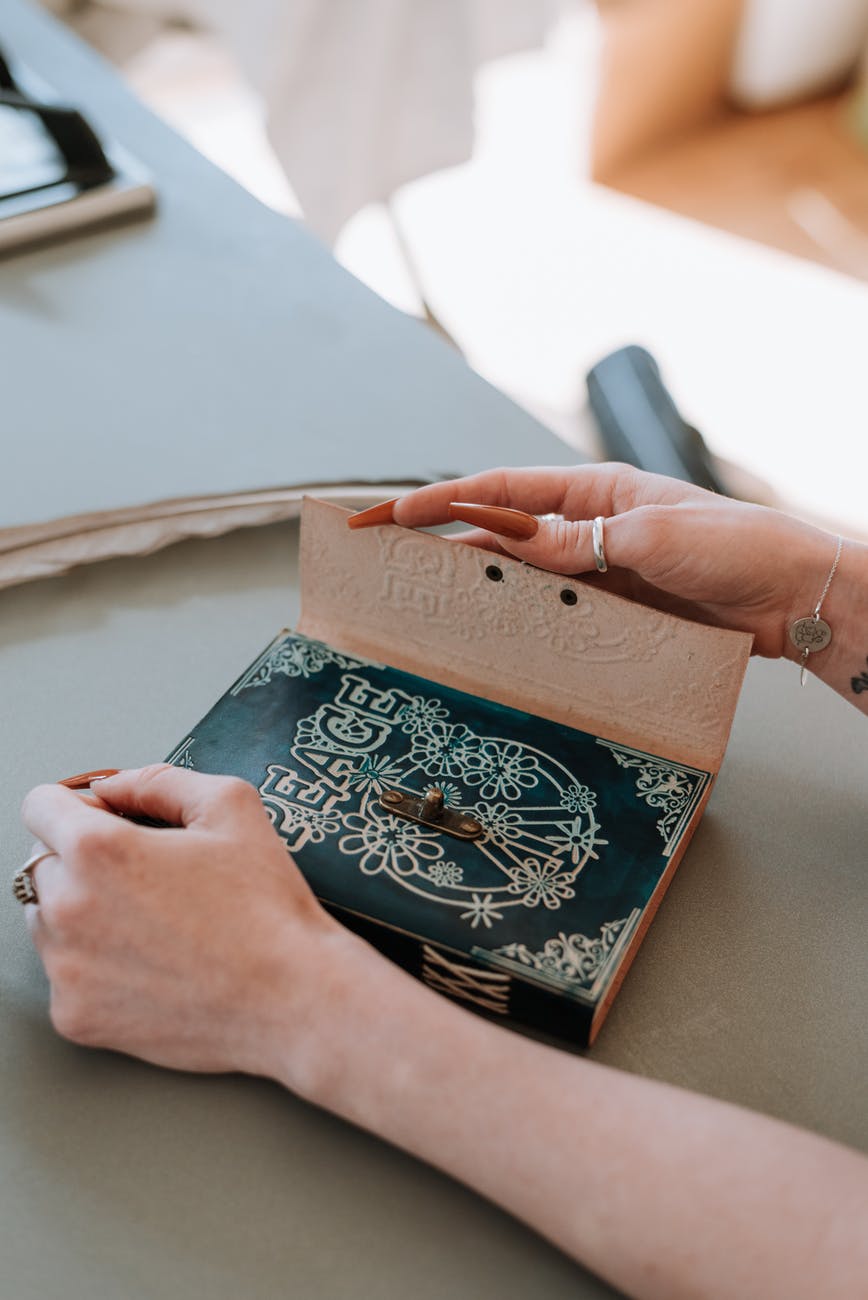
The Mantra that Worked Today

So I am getting ready for an event tomorrow. We were picking up a few food items and I got a little anxious in the snack aisle because that’s how I get when I’m trying to pick out snacks for other humans. Finally, I gave up and called my husband who guided me. At this moment, I’m relieved to have everything we needed. And then it was time to pay. No worries, we have enough. I give my daughter my wallet and go to take a moment to myself. When I get back, she says the card wasn’t in there. My head spins. I have no idea where my card is. I’m on the edge of tears. Can’t think straight. I’m so lost, I call the grocery store in Mass where we last used the card. Half way home, I take a deep breath and say, “Everything is going to be ok.” And I looked over to my mom and convinced her. She didn’t need the convincing, I needed it. Saying those words a few times outloud and to myself helped me become calm enough to remember exactly where I left it.

Moral of the story, use your mantras not for luck or some ritualistic reason. Use them to calm yourself enough to think things through with a clear head.

Heart Song

I admire her persistence

and oh, how her howling soothes

like the thumping inside my womb

those vibrating drums birthed from her mouth

I admire her persistence

how these beats stretch across her howl

The night twinkles

bare, bare, bare, with dull blood

Dance in her womb, crawl on your knees, eyes shut

A mighty hand guides you to the unknown

-Saschia Johnson

Create Rich Experiences

When writing with others, I think it’s important to make sure we are appreciating both aspects in our writing communities; our differences and our commonality

For most of us writers, we’re all doing our own thing, writing our own way, living our own individual writer’s life the best way we know how. We focus on our own genres. We have our own habits and routines and superstitions.

It’s funny, in my fantasy world we all understand each other and if we don’t, we patiently take time to understand each other. We laugh, we listen, we research to fill in the gaps. We find soul, or symbols or our own spiritualities in our words. In reality, that’s not how everyone writes. I used to amp myself up before a writing event to find out that my writing beliefs, writing habits, and writing behaviors are not in the majority.

At first, this was hard for me to understand. I didn’t understand that there was any other good reason to write outside of my beliefs. But over time I learned to listen to people to understand where they were. I stopped listening to find commonality. I wanted to learn to listen to the interesting details in their craft that may be different or outside of my own thought processes.

All of our writing journeys are different and that’s what’s important to remember when gathering with other writers. But I also think it’s important to appreciate that you’re battling the same blank page. Writer’s block doesn’t make you special, most writers get it. Writer’s flow doesn’t make you special, most if not all have experienced it. But, not all humans are writers, not all humans have battled writers block, and so that means not all humans have experienced writers flow. These are things that writers have in common.

That’s why I think it’s important to intentionally take time to appreciate both our commonality and our differences. It creates a feeling of connectedness as well as individuality. It makes for a rich writing experience. And what can be better than a life full of rich experiences?

The Challenge

There’s creative freedom in having nothing to prove.

Seeing the world for all that it is requires nothing but brutal honesty, you in your natural states. Same with writing, it doesn’t require a perfect human to share the truth, it requires an honest human. Once we step away from the insecurities that tell us we have to prove we’re something other than ourselves, we can allow our creative freedoms to flow.

Freedom to Listen, What I Forgot

I like to listen. I have learned a great deal from listening carefully. Most people never listen.

Ernest Hemingway

Among the three freedoms is freedom to listen. I felt something was missing when I finished it and now I finally figured it out. It’s learning to listen. There’s listening to the lessons that other’s have to offer and then there’s listening to the things that are never said. Both are equally important. There’s so many possibilities that we can only realize when we’re listening to what’s not being said. It’s not just listening with our ears, it’s listening with our eyes, guts, and intelligence.

I feel better now that I’ve finally written it out.

It’s Not About Creative Freedom

Where do I want my work to lead me? This is what I’ve been asking myself tonight. If I’m going to leave my future self a bread crumb trail, where do I want to lead myself?

Is the point of this only to reach creative freedom?

It’s not only to reach creative freedom. Most of us Conscious writers have felt creative freedom in some way even if only on a small scale. The purpose of all this is to inspire Conscious writers and to keep us all writing to stay conscious or to stay Conscious enough to write.

Isn’t it so easy to slip into apathy, into a state of internal slumber. The sleep that only allows external factors to take the reigns of our life. There’s no spontaneity, no creative problem solving. What is left but a husk barely aware of their own gifts.

So all this isn’t about creative freedom, no, it’s about staying awake and alive and aware of all the unlimited possibilities that await us.

That is where I want my work to lead.

Writing, Magic, Obsessions

The unexplained happenings in the writing world.

If you write enough, you tend to notice certain patterns. It’s usually a series of coincidences, but then again you may just become a hyper observant creative. You need the minute details for your story, so to find them you may become borderline obsessed with finding the answers.

As a writer, I like to call our obsessions inspirations. The long drawn out search can be the entire purpose of writing the story ( sometimes). The magic isn’t spitting out a story over night, the magic is the becoming of the writer. The development of the skillset. The unfolding of the story through listening, editing, and rewriting.

Ah, artists, writers, and all things becoming, it all melts my heart the same way happily ever after does.

Legal frameworks to protect and promote artistic freedom

While doing some research I learned about UNESCO, The United Nations Educational, Scientific and Cultural Organization, which “is a specialised agency of the United Nations (UN) aimed at promoting world peace and security through international cooperation in education, arts, sciences and culture.”

It all sounds real nice. I about UNESCO from an article written by Charles A. Thomson titled  “Creative Freedom and the World Crisis.” Here’s a quote I liked

An international order which will satisfy our hopes of peace is posited not only on political and economic cooperation, but also upon steps toward a greater cultural unity of mankind which may underlie the infinite variety of free individual expressions.

Thomson, Charles A. “Creative Freedom and the World Crisis.” Music Educators Journal, vol. 28, no. 6, 1942, pp. 11–13. JSTOR, https://doi.org/10.2307/3385929.

If you notice in the citation, the journal was from 1942! They are still a thing today. I had to look them up. They even have a Facebook page.

What I’m learning to appreciate is that it’s ok to demand creative freedom. It’s so ok that there are laws put in place to protect our creative freedom. I took this from Wiki. Check it out below.

1980 UNESCO Recommendation Concerning the Status of the Artist

Artistic freedom first appeared as a distinct right in UNESCO’s 1980 Recommendation concerning the Status of the Artist underlining “the essential role of art in the life and development of the individual and of society’ and the duty of States to protect and defend artistic freedom.”[19] Although not a binding instrument, the Recommendation is an important reference in defining artists’ rights across the spectrum worldwide. The 1980 Recommendation serves as a reference for policy development and as a basis for new formulations of cultural policies.

“Member States, recognizing the essential role of art in the life and development of the individual and of society, accordingly have a duty to protect, defend and assist artists and their freedom of creation. For this purpose, they should take all necessary steps to stimulate artistic creativity and the flowering of talent, in particular by adopting measures to secure greater freedom for artists, without which they cannot fulfill their mission, and to improve their status by acknowledging their right to enjoy the fruits of their work.”[19]

and also this one

2005 UNESCO Convention on the Protection and Promotion of the Diversity of Cultural Expressions

The 2005 Convention on the Protection and Promotion of the Diversity of Cultural Expressions acknowledges that “the diversity of cultural expressions can only be promoted if human rights and fundamental freedoms are guaranteed.

So when we are encouraged as writers to protect our writing time, I will remember that my writing time is so valuable there are governmental laws and organization put in place that literally protect my writing time. SO if you’re looking for more permission to prioritize your writing time, here it is.

Sources

https://www.facebook.com/unesco

Thomson, Charles A. “Creative Freedom and the World Crisis.” Music Educators Journal, vol. 28, no. 6, 1942, pp. 11–13. JSTOR, https://doi.org/10.2307/3385929. Accessed 27 May 2022.

https://en.wikipedia.org/wiki/UNESCO

https://en.wikipedia.org/wiki/Artistic_freedom#cite_note-:0-19