Write to Wake Up

Writing wakes me up to so many things, here’s a few.

Photo by Yannick Pulver on Unsplash

Do you write to wake up?

And no, I don’t mean in the morning. Writing in many ways shines a light on the parts of yourself that you didn’t even notice. And the lessons that come with being a writer also tend to shine a light on your flaws, whether it be procrastination, perfectionism, or fear. The entire process proves many things that you are not.

You don’t start out writing good stuff. You start out writing crap and thinking it’s good stuff, and then gradually you get better at it.
That’s why I say one of the most valuable traits is persistence.
― Octavia E. Butler

Photo by Miguel Bruna on Unsplash

While it may shine a light on what you are not, it also shines a light on all the things you’re capable of accomplishing. I’ve been working on my experimental fiction novel for over a year and I haven’t lost my fire. I’m nearing the end of my second rewrite so I will be transitioning to focus more on development of worlds and characters. Which is fun but new worlds can feel daunting. Anyhow, it feels good, the fact that writing my novel got me through one of the hardest times of my life and I’m still going with as much or maybe even more motivation as when I started. I’m a long term commitment type of person. I like friends from childhood, I like memories, and I like to have a family growing beside. So I’ve learned, writing this book is a wonderful addition to my existence. With all that being said, writing has awakened me to a trust in myself that no other occupation has gifted me. 

What’s more is that spending time with my characters has really helped me look inward. I often ask myself, would I do that if I was in that situation. If the character does something I never would, I sit with that character and calculate each step which makes me realize, I’m not different from the villians in my story. Thinking about my writing, even with significant amounts of solitude, connects me with humans around the world.

“‘You have been my friend,’ replied Charlotte. ‘That in itself is a tremendous thing.’” — E.B. White, Charlotte’s Web

The writing process isn’t the only thing that wakes me up. The community I’ve gained while developing myself as a writer is a huge part of the waking up process for me. I’ve joined writing communities on every platform and I feel at home in every single one of them (except for maybe tumblr). The writing community is a culture I wish everyone could be part of. The communities wake me up to a million things; genre preference, what I’m capable of, walls worth breaking down, and grammar rules worth accepting. But my all time favorite aspect of the writing communities I follow is that I am enough. Whether I have typos, unfinished work, 10 followers or 2k followers, they are there cheering me on on every platform. 

Photo by Julian Hanslmaier on Unsplash

Waking up to who your are and what you’re capable is one of the most valuable things you could do while you’re breathing. I wish with all my might that someday this journey will pay our bills. While I’m traveling there, I won’t forget to reach out to other writers, to look within, and I definitely won’t forget to celebrate my milestones. Let’s keep going, shall we? 

Photo by Duy Pham on Unsplash

Anyone moderately familiar with the rigours of composition will not need to be told the story in detail; how he wrote and it seemed good; read and it seemed vile; corrected and tore up; cut out; put in; was in ecstasy; in despair; had his good nights and bad mornings; snatched at ideas and lost them; saw his book plain before him and it vanished; acted people’s parts as he ate; mouthed them as he walked; now cried; now laughed; vacillated between this style and that; now preferred the heroic and pompous; next the plain and simple; now the vales of Tempe; then the fields of Kent or Cornwall; and could not decide whether he was the divinest genius or the greatest fool in the world.
― Virginia Woolf, Orlando

Just a little note:
If you’re a writer looking for writing groups to be part of, reach out to me on Instagram at @jayne_press and I’ll try my best to guide you in the right direction. Happy Awakening fellow Writers. 

Sources

https://www.goodreads.com/quotes/tag/writing-process

Follow me on Medium at jaynepress.medium.com

I’m Overwhelmed with Domestic Duties

And I’m not just talking about house work. I’m talking managing the entire household. So I’m taking a break from it. Here’s a quote from NPR

On how women often assume the responsibility for “invisible work,” such as maintaining schedules and maintaining family ties

https://www.npr.org/2020/05/21/860091230/pandemic-makes-evident-grotesque-gender-inequality-in-household-work

There’s also this from the same article,

There’s a whole body of research around what’s called “the mental load.” It’s something that women also disproportionately bear. … It’s all of the stuff that you have to keep in your mind. 

Here’s a quote from a journal titled Invisible Work by A. Daniels from Oxford University Press that speaks on both women and impactful volunteer work

The lack of social validation implicit in disregard of all the [home planning] required tells women this effort doesn’t count as work; and they themselves often discount the effort it requires. Another area where the folk idea of work is too restrictive is in the distinction between paid and unpaid labor commonly associated with work–even in the public world. The work of community service volunteers is useful, but that it is not paid tells others— and volunteers themselves that it is not needed, not really important work despite all the lip service about the value of altruistic endeavor.

Daniels, A. (1987). Invisible Work. Social Problems, 34(5), 403-415. doi:10.2307/800538

I don’t need all this “credible” validation but it makes for better writing when you add quotes from people who paid a lot of money to have authority to say them. I’m taking a break from the invisible and visible domestic duties. I felt like sharing so other women who share their home can take a break with me. Then we’re not in this alone. I don’t mind breaking alone but aren’t we so much better together.

I’ll be writing my book if you need me. #momsaway

Keep Going

There’s zigzags
and byways and
dark shifty alleyways

What do you get when you
can’t find your way?

Found? Or left to run astray?

I don’t know what comes between
those two things but I sure know
you’re going to find
all the things you’re meant to
you’re not behind just make sure
you
Keep going.

Saschia Johnson

Abundance

Responsibilities are getting to me
the world and its demands
the time and its movement

It all calls me
It all pulls me

and still I’m going to wake up
grateful for one more day

I’m going to create a life
I’m honored to leave behind
I’m going to support the parts
of myself that I need in order
to build the life I dream

The water falls into my palms
and overflows down my arms
over my knees and puddles
between my toes

Always returning
So many new beginnings

Saschia Johnson

I’m proud of you for showing up even when you don’t want to.

Stay Afloat

When the going gets tough, do what you love.

I was having a hard time staying focused on so I took a moment to do what I love. It kept me focused and kept me from completely shutting down.

Do what you love. Know your own bone; gnaw at it, bury it, unearth it, and gnaw it still.

Henry David Thoreau

Thoreau gives some good advice here. there’s also a quote that goes “Find what you love and let it kill you.” there’s some debate on whether Bukowski says it or not. Anyhow I’m writing this to remind you that doing what you love is exactly what you do to keep from falling into that awful state somewhere between avoidance and helplessness. Keep your head up. Keep swimming. You got this.

Just a shortie today. But I showed up so points to me.

Check me out on Medium @jaynepress

Photo by Tima Miroshnichenko on Pexels.com

The Waiting Place

An embrace of the moments when waiting becomes visible can remind us not of the time we are losing but of the ways we can demystify the mythology of instantaneous culture and ever-accelerating paces of “real time.” 

https://www.brainpickings.org/2018/12/17/jason-farman-delayed-response/

This is taken from Maria Popova a writer I admire for her ability to weave information, wisdom, and creative inspiration into to one post. Her posts a dense but when you finish, you feel light as a feather. Anyhow, right now I’m in a place where I’m waiting. I do want to take my time. I’m willing to step away from control. I’m willing to strategize to make the best choice for my community, but I’m gunna be honest, the wait is rough.

What’s interesting is that I didn’t realize how much I’ve allowed this waiting place to stop me from functioning. I feel like I would be more productive if I had everything I needed right now. While being in the waiting place, I’ve gone into a slump. I feel like there’s nothing else to be done since I’m waiting. It feels strange and even stranger when I’m fully aware of it. It turns into this internal struggle ultimately leading to a nap. Which is not resourceful, if you asked me.

So how to change my mindset in my waiting place?

I think there are a million ways to change my mindset on waiting but Brain Pickings was the first place I started. And Brain Pickings gave me exactly what I needed. Let’s start here.

Waiting, as represented by silences, gaps, and distance, allows us the capacity to imagine that which does not yet exist and, ultimately, innovate into those new worlds as our knowledge expands.

Jason Farman taken from https://www.brainpickings.org/2018/12/17/jason-farman-delayed-response/

If I shift my mindset from there’s nothing I can do, to, I have so many things I can think up to get me excited about my future, maybe that will help. Let’s keep going. Jason Forman is also quoted here saying,

Waiting points to our desires and hopes for the future; and while that future may never arrive and our hopes may never be fulfilled, the act of reflecting on waiting teaches us about ourselves. 

Imagine that. Allowing this time to change me. I stepped into this month a person only slightly aware of her lack of waiting skills and will leave this month as a woman who waits better than she did before. This is getting more inspiring as we go. Glad we’re doing this together. Now for the two practical strategies to transform our waiting from a negative to a positive experience.

  • The first is to remember the positives of waiting. It’s easy to fall into a mindset where we feel like things should go our way, but it’s so valuable to find the upside to situations that don’t go the way we’d prefer them.
  • The second is to think of time as a collective thing, rather than distinct from one another. This mindset shift, she says, is empathetic. It’s a wonderful thing to wait a tad bit longer because you understand the situation of another person.
  • and for a bonus, I’ll add one of my own. It’s always important to focus on what you can control. You may not be able to control your waiting time but you can control how you use that time to your advantage. And since we’ve made it to the last strategy, I think we can both say, we’re starting in the right place; focused on changing our mindset.
Photo by Pixabay on Pexels.com

Johann David Passavant Changed Art Lit Forever

Johann David Passavant was born in 1787 in Germany. There’s isn’t much about Passavant’s personal life but let’s take some time to appreciate his contribution to art history. We know that Passavant was a painter and an enthusiastic spokesman for the Nazarene group. (The Nazarene movement was a group of artists inspired to bring spirituality back into art.)

What Passavant gifted us was his shift on the word oeuvre from his monograph on Raphael. He did publish other articles, but at age 52, his historical collection of Raphael was published and changed the way we write monographs forever. The monograph was titled, Rafael von Urbino und sein Vater Giovanni Santi. According to “Art as Existence” by Gabriele Guercio, “Never before in the history of this form of writing had the artist work been presented so explicitly and systematically as a multidimensional organic whole.” His writing style though similar to other monographers had never been done before. He had to pave his own way through writing his monograph in this form. It must not have been easy but he was determined. It says, “Passavant’s project demanded that he chart Raphael’s progress from within, drawing a web of relations among artist’s works that parallels the course of the artist’s life.” This reminds me of one of those boards with the red thread and thumbtacks. He must have spent a lot of time and energy gathering all the little pieces of Raphael’s life and works but it paid off.

His monograph “epitomized in the literature of art the modern conception of the human being as an expressive individual driven to realize his or her nature, whose life cycle is characterized by a continuous dialectic between being and becoming.” Using this method gives the monograph a similar feel to works of fiction. He does this by giving the readers a view of the artist’s character arc.

I find it fascinating the amount of work it took Passavant to give life to the artists and how impactful it was in the end. It feels like we, as writers, are constantly reminding the world of our humanity. Being human is something so easy to misplace or to leave out, especially with the greats. We give them too much credit. We undermine all the hard work they are putting into their art while also handling the same stressors that come with life; death and loss, heartbreak, mental illness, illness, and all the other things that cause suffering without discrimination. We writers will forever be called to bring life to humanity or to remind humans that they are human. We are here to say,

Hey humans we are always somewhere between becoming and being and that’s ok because we’re all like that.

And then we write about it and live like we believe it. Sometimes it pays off and we get to leave the world a little bit better than when it found us.

Sources

https://arthistorians.info/passavantj

Art as Existence by Gabriele Guercio

Follow and Like Jayne.press on Facebook

Correction it was Vasari

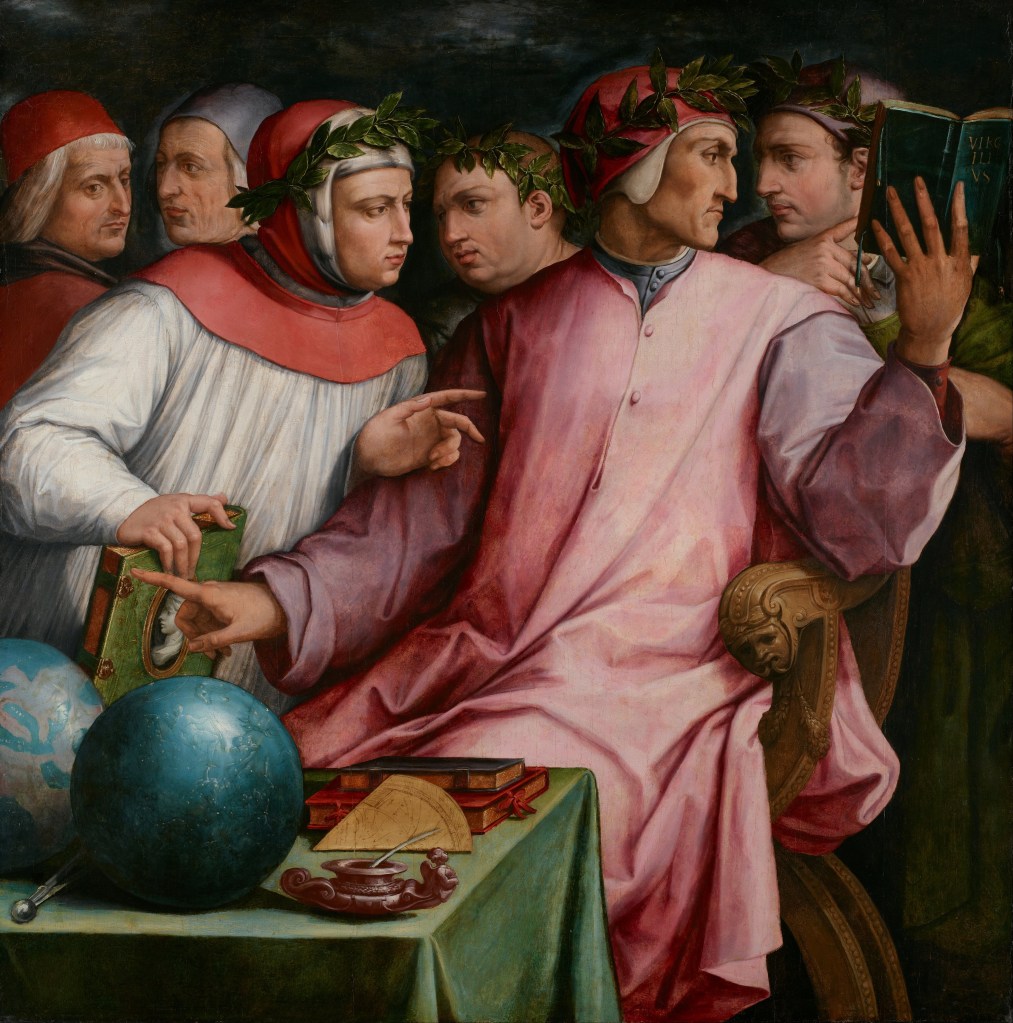
I made an error on my last blog post. Giorgio Vasari who was alive from 1511- 1574, is actually the author of The Lives, the first and most esteemed model in the west for writing about artist’s life and work. I made the mistake of mentioning that Johann David Passavant, (alive from 1787-1860), was the first writer of the monograph, that was false. Since I made such a silly error, I’d like to take the time to explain who’s who between the two artist monograph writers. Today, I will start with Giorgio Vasari.

According to Theartstory.org, Vasari was the oldest of six and lived in Arezzo, Tuscany. He was blessed with art as part of his upbringing. Art and creativity had been passed down through generations. When he was young, he was raised artists, but he was also considered a sick kid. That didn’t hold him back though. He attended public school and by the time he finished school, he was ready for an apprenticeship with Michelangelo Buonarroti. After his apprenticeships, at 16, he took over his family’s financial needs due to his father passing from the plague. Though it was a tragic loss, this experience gave him an insight on financials that other artists did not gain while they lived the artist life. Finally, he returned to art after a friend invited him back where they studied the greats like Raphael and Michelangelo. Even with such a profound background in the arts, Vasari did not publish his first book until he was 39 years old.

Let’s talk about the book. According to Art as Existence by Gabriele Guercio, Giorgio Vasari’s first book was titled, “The Lives of Painters, Sculptors and Architects.” It “is grouped into three parts or ‘ages’ (artistic periods), each marking the beginning of a different style.” He uses this to organize dates and times and progression of artistic proficiency within each period. Vasari’s intention was to “rescue from oblivion ‘the names of sculptors, painters, and architects’ and to enable readers to discern in what way the masters differed from each other.”

Vasari preferred to combine more than just the evolutionary process of their art, he intentionally included; the artists’ individuality, talent, and character. He gave a perception of artists in a way no one else in that time had done yet. He was revolutionary in the way he presented an artist and their work. His work is the roots for the nineteenth century monograph, so many monographers even today refer to his work.

After some time, Vasari found his place in the art world and gave us insights we would have never had. He was a sick kid who lost his father at 16 and now we refer to him when we need to understand the evolution of the great artists from before our time. Imagine seeing a need in the writing world and filling it for lifetimes after you’re gone. What an accomplishment.

A cover of the Lives By Giorgio Vasari, Public Domain,
https://commons.wikimedia.org/w/index.php?curid=3903220
Giorgio Vasari – Institute of Art Minneapolis Institute of Art at Google Arts & Culture

Follow and Like Jayne.Press on Facebook

Follow me on Instagram @Jayne_Press